
English version below
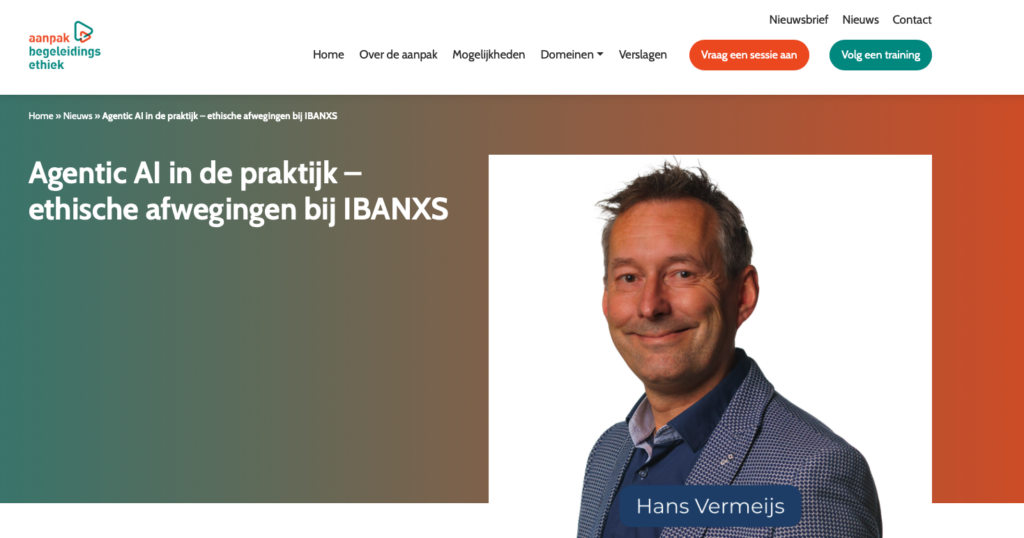
Tijdens een van de dialoogsessies van de Aanpak Begeleidingsethiek (ABE), georganiseerd in samenwerking met het ministerie van BZK, stond IBANXS centraal als praktijkvoorbeeld. In het interview dat daaruit voortkwam, deelt onze CEO en oprichter Hans Vermeijs hoe wij Agentic AI inzetten om onze dienstverlening schaalbaar, betrouwbaar en toekomstbestendig te maken.
Met meer dan 2500 aangesloten banken in 31 landen en dagelijks ruim 1,5 miljoen verzoeken, groeit IBANXS snel. Die groei vraagt om slimme automatisering. Sinds vorig jaar bouwen we daarom samen met DevRev aan AI-agents die ons platform ondersteunen. Eén van de meest impactvolle toepassingen is het verwerken en categoriseren van systeemalerts: van het clusteren van duizenden meldingen tot het automatisch aanmaken en verrijken van tickets én het toewijzen aan de juiste medewerker.
Tijdens de ABE-sessie werd deze casus gebruikt voor een bredere ethische reflectie op Agentic AI. Een diverse groep experts – van accountants en juristen tot technici – keek kritisch mee. Het leverde waardevolle inzichten op, onder andere over het belang van testbaarheid en transparantie: hoe behoud je controle als AI zelfstandig beslissingen neemt? Welke waarborgen heb je nodig wanneer systemen steeds autonomer worden?
Hans: “Je denkt dat je overal aan hebt gedacht, maar met zo’n sessie krijg je ook andere perspectieven. Dat is ontzettend waardevol.”
Hoewel onze AI-agents bewust geen toegang hebben tot financiële of privacygevoelige data, was er veel aandacht voor toekomstscenario’s. Wat als agents in de toekomst met elkaar gaan communiceren? Wat betekent dat voor toezicht, betrouwbaarheid en vertrouwen?
De dialogen zijn voor IBANXS een startpunt. We blijven investeren in technologie, maar óók in de ethische afwegingen die daarbij horen. Want innovatie in de financiële sector vraagt niet alleen om snelheid en schaalbaarheid, maar ook om transparantie, testbaarheid en verantwoordelijkheid.
Wie het volledige interview wil lezen, vindt het hier:
‘Agentic AI – Ethische afwegingen bij IBANXS’
Agentic AI at IBANXS: Innovation That Requires a Value-Driven Dialogue
During one of the dialogue sessions of the Approach to Guidance Ethics (ABE), organized in collaboration with the Dutch Ministry of the Interior (BZK), IBANXS was featured as a real-world case. In the resulting interview, our CEO and founder Hans Vermeijs shares how we apply Agentic AI to make our services scalable, reliable, and future-proof.
With more than 2,500 connected banks in 31 countries and over 1.5 million daily requests, IBANXS is growing rapidly. That growth calls for smart automation. Over the past year, we have worked with DevRev to build AI agents that support our platform. One of the most impactful applications is the automated handling of system alerts: clustering thousands of notifications, enriching or creating tickets, and assigning them to the right team member based on expertise.
During the ABE session, this case became the starting point for a broader ethical reflection on Agentic AI. A diverse group of experts—accountants, lawyers, technologists, and practitioners—shared their perspectives. This multidisciplinary view uncovered valuable insights, especially around testability and transparency: how do you stay in control when AI starts making decisions autonomously? What safeguards are needed as systems gain more independence?
Hans notes: “You might think you’ve considered everything, but a session like this opens your eyes to entirely new perspectives. That’s incredibly valuable.”
Although our AI agents are deliberately kept away from financial or privacy-sensitive data, the group explored future scenarios as well. What happens when AI agents from different systems begin interacting with each other? What does that mean for reliability, oversight, and trust?
For IBANXS, these conversations are a starting point. We continue to invest not only in cutting-edge technology, but also in the ethical considerations that come with it. Innovation in the financial sector requires more than speed and scalability—it also demands transparency, testability, and responsibility.